26/02/2026
Everything you need to know about plastic injection moulding
Navigating the manufacturing industry can often feel like a minefield.
If you’re developing a new product, you’re likely trying to balance cost, quality, lead times, and risk, often without clarity on what a fair price looks like, or what should be included in a quote.
If you’re already producing parts, you might be questioning whether your current supplier is delivering value for money, good quality parts, and reasonable turn around times.
Plastic injection moulding is a technical process, but the biggest challenges are often commercial rather than mechanical. How much should a tool really cost? When is it better to modify an existing mould rather than build a new one? What affects part pricing? You need answers to these questions to set your project up for success.
This guide brings together the questions we are asked most often. It’s designed to give you clear, practical answers so you can make informed decisions, whether you are launching something new, or reviewing an existing production setup.
How much does injection moulding really cost?
The cost of plastic injection moulding varies greatly with the size, scope and duration of your project. It depends on two main areas - the tool and the parts.
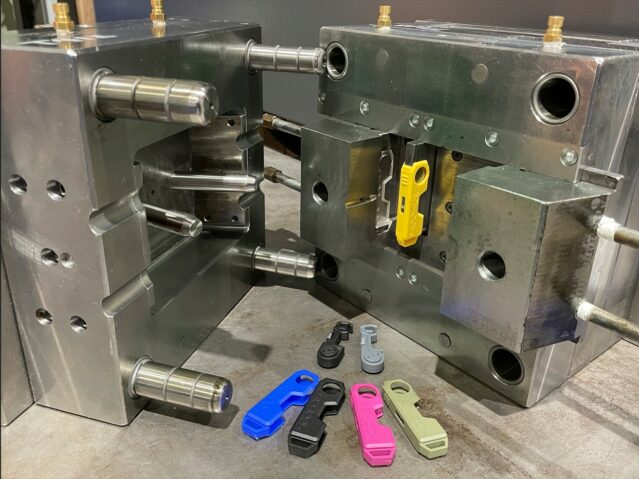
First of all, the mould tool is a large part of your upfront investment. This is the precision engineered steel tool that forms your plastic part. The cost varies depending on the size and complexity of the part, the type of material being used, the expected production volume, and the lifespan required. A simple, single-cavity tool for a small component will cost far less than a complex multi-cavity tool designed for high volume production.
Secondly, part price plays a role in ongoing production costs. Once the tool is built, you’ll pay for the manufacture of each moulded part. Part pricing is influenced by cycle time (the time it takes to produce one part), the material cost, the weight of the component, and the number of cavities in the tool. Larger volumes generally reduce the unit cost because the initial tooling investment is spread across more parts.
It’s also important to look beyond the headline figures. A lower tooling quote does not always mean better value. Consider what’s included - has the design been reviewed for manufacturability? Is sampling included? Who owns the tooling? What happens if modifications are needed later?
In many cases, modifying an existing tool can be more cost effective than starting from scratch. A good manufacturer will be open about this rather than pushing you towards a full rebuild if it’s not required.
If you’d like to explore what influences the cost of your project in more detail, you can read our full guide on how much plastic injection moulding costs.
Why choose injection moulding over other manufacturing methods?
Plastic injection moulding is not the right solution for every product. However, when it fits, it offers clear commercial and practical advantages over many alternative processes such as machining vacuum forming, or 3d printing.
One of the biggest benefits is repeatability. Once a mould tool is built and validated, it can produce thousands, or even millions, of identical parts with very tight tolerances. This level of consistency is difficult and expensive to achieve with manual or lower volume processes.
It’s also highly efficient at scale, While the upfront tooling investment can seem significant, the unit cost drops as volumes increase. For medium to high volume production, injection moulding often becomes the most cost effective option.
The process allows for complex geometries that would be difficult or time consuming to machine. Features such as ribs, clips, hinges, and textured finishes can be built directly into the tool. This reduces secondary operations and assembly time.
Material choice is another advantage. A wide range of engineering polymers are available, allowing you to balance strength, flexibility, chemical resistance, heat resistance, and cost. That flexibility makes it suitable for industries ranging from consumer goods to medical and industrial applications.
Finally, injection moulding supports long term scalability. If demand grows, the tool can often be adapted with additional cavities to increase output, rather than redesigning the part from scratch.
If you’d like to read more about these advantages, you can read our guide on the seven ways plastic injection moulding can benefit your company.
Should I manufacture in the UK or overseas?
This is one of the most common questions we hear. On paper, overseas manufacturing can appear cheaper. Lower labour rates and lower tooling quotes often attract attention at the early quoting stage. But headline pricing rarely tells the full story.
When you manufacture overseas, you need to factor in shipping costs, import duties, longer lead times, currency fluctuations, and the cost of holding more stock to protect against delays. Communication can also become slower and more complex, particularly if the design changes or quality issues arise.
There is also the issue of supply chain volatility. Global material shortages, political instability, economic disruption and changes in trade agreements can all have a direct impact on overseas production. Even if your supplier is reliable, external factors beyond their control can delay shipments or increase costs with little warning. Manufacturing in the UK reduces your exposure to many of these variables and gives you a more stable, predictable supply chain.
Manufacturing in the UK gives you greater control. You can visit the site, review tooling in person, and resolve issues quickly. Lead times are shorter and more predictable because you are not relying on international freight or customer clearance. This reduces risk and can improve cash flow, as you don’t need to commit to large batch quantities as far in advance.
For many businesses, the stability, visibility and responsiveness of UK manufacturing outweigh a small difference in unit cost.
If you’d like more details about the advantages of UK production, you can read our full guide about using a UK based supplier.
How do I know if a plastic injection moulding company is reliable?
Choosing a moulding partner is a long term decision, so reliability needs to go beyond a competitive quote. You are trusting a company with your tooling investment, your product quality, and often your reputation in the market.
A dependable manufacturer should be transparent with pricing, clear about what is included in a quote, and willing to explain technical decisions in plain terms. They should be proactive and knowledgeable, reviewing your design before tooling begins and flag potential issues early to save on cost and turnaround times.
Look at their technical capability and experience. Do they have in-house toolmaking knowledge? Can they support design for manufacture, adjusting a part so it moulds efficiently and consistently? Do they carry out proper sampling and validation before full production begins?
Communication is another key indicator. A reliable partner will be proactive, responsive, and honest about lead times, costs and challenges. They should also have clear quality control processes in place and be open to audits or site visits.
Ultimately, reliability shows in how a company handles the details. Not just when things go smoothly, but when adjustments or improvements are needed. If you’d like a more detailed breakdown of what to look for, read our guide on what you should look for in your plastic injection moulding company.
Still have questions?
Every project is different. Tooling budgets, production volumes, material choices, and timelines all shape the right approach. The key is having clear information and a manufacturing partner who will talk you through the options honestly.
At Bowles and Walker, we work with businesses at every stage. Some are developing a product for the first time and need guidance from concept through to production. Others already have tools and are reviewing costs, quality or supply chain risk.
Whether you need advice on tooling, part pricing, UK manufacturing, or modifying an existing mould, we are happy to have a chat about what makes sense for your project.
If you’d like to discuss an idea or review your current production setup, get in touch with our team by calling 01953885294 or sending an enquiry through our online form. We’ll help you break down the jargon, help you understand your options, and find the most practical and cost effective solution.